
Every product is independently reviewed and selected by our editors. If you buy something through our links, we may earn an affiliate commission at no extra cost to you.
If your air fryer rotisserie chicken keeps turning out unevenly cooked, with dry breast meat and pale, sagging drumsticks, chances are the bird wasn’t trussed properly. Trussing a chicken may look like a fancy chef move, but it’s actually a simple technique with big results. It ensures your bird cooks evenly, keeps moisture inside, and gets that picture-perfect golden-brown finish all over.
In this guide, you’ll learn the easy, foolproof way to truss a chicken for your air fryer rotisserie. No culinary school tricks, just clear, step-by-step instructions that work every single time.
Why Trussing a Chicken for Air Fryer Rotisserie Matters
Trussing isn’t just about appearance. It’s a functional step that directly impacts how your chicken cooks.
The Real Problem
Most air fryer rotisserie baskets or skewers spin the chicken continuously. If the legs and wings stick out loosely, they can burn, block airflow, or throw the balance off, causing the chicken to wobble or rub against the basket. Trussing holds everything tight and secure so the rotisserie rod spins smoothly and the bird browns evenly.
Why It Happens
Without trussing, the breast often finishes cooking before the thighs. That’s because air circulates unevenly around a misshapen or unbalanced bird. The unprotected wings and drumsticks dry out or burn while the thickest parts remain undercooked.
Common Misconceptions
- Myth: Trussing is only for oven roasting. Truth: It’s just as important—arguably more so—for air fryer rotisserie, where air circulation and rotation depend on balance.
- Myth: Only whole chickens need trussing. Truth: Even a split bird benefits from gentle tying to keep parts secure during cooking.
When It’s Serious
If your chicken hits the basket walls, the skin can tear and juices leak out. Not only does this ruin the presentation, but it also dries out the meat. A well-trussed chicken avoids all that by maintaining consistent shape and rotation.
Tools and Materials You’ll Need
| Item | Why You Need It |
| Kitchen twine (cotton butcher’s string) | Strong, heat-safe, food-safe string to tie the bird securely. Never use synthetic string or thread—it can melt. |
| Sharp kitchen shears or knife | For trimming string and any excess fat or loose skin. |
| Paper towels | To pat the chicken dry, which helps the string grip and promotes crispy skin. |
| Your air fryer rotisserie setup | Includes the spit rod, forks, and basket (depending on your model). Make sure all parts are clean and assembled correctly. |
Pro Tip: If you don’t have butcher’s twine, use unwaxed dental floss in a pinch, but only 100% cotton types free of flavor coatings.
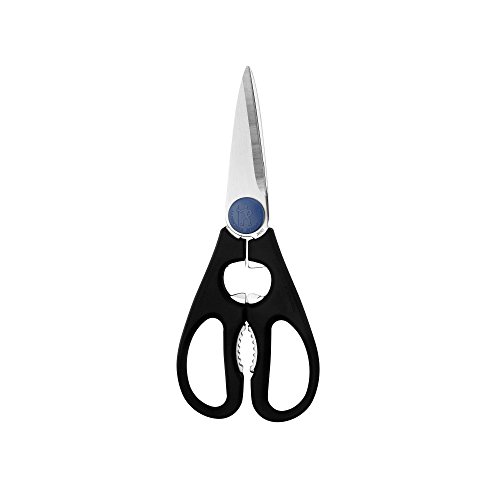
- High-quality corrosion resistant stainless no-stain steel
- Micro-serrated blade edge for slip-proof cutting
- Comfortable, hygienic, heavy duty break-resistant polypropylene handle
Step by Step How to Truss a Chicken for Air Fryer Rotisserie
Step 1: Prep and Dry the Chicken
Remove the giblets and pat the entire bird dry inside and out. A dry surface helps string stay in place and encourages crisp skin later.
Step 2: Tuck the Wings
Fold each wing tip back and tuck it under the bird’s shoulders (like it’s placing its hands behind its head). This prevents burning and keeps the chicken compact.
Step 3: Position the Bird
Place the chicken breast-side up on your cutting board with the legs pointing toward you.
Step 4: Loop Under the Tail
Cut a piece of kitchen twine about 3 feet (90 cm) long. Center it under the tail end of the chicken so both ends of the string are equal.
Step 5: Cross and Pull the Legs Together
Bring the twine up and cross it over the tops of the drumsticks. Pull tight to bring them snugly together—they should point straight toward the breast. This helps protect the breast from drying out.
Step 6: Secure the Ankles
Loop the twine around the crossed drumsticks and pull firmly. Tie a double knot. The legs should be touching and held securely against the body.
Step 7: Wrap Toward the Neck
Without cutting the twine, pull both ends along the sides of the chicken toward the neck area, catching the tips of the wings underneath the string. This keeps them tight to the body.
Step 8: Anchor Under the Neck Flap
Cross the twine under the neck flap or skin near the top and tie another double knot. Trim off excess string.
Step 9: Mount on the Rotisserie Spit
Insert the rotisserie spit rod through the cavity from the neck to the tail. Fix the meat forks firmly into the breast and tail area so the bird is centered and balanced. Tighten the screws securely.
Safety Warnings
- Always handle raw poultry with clean, dry hands and sanitize surfaces afterward.
- Keep string ends trimmed short to avoid contact with heating elements.
- Check that the string is 100% cotton and oven-safe before use.
Common Mistakes to Avoid
- Using too little tension: Loose trussing does nothing. The chicken should feel snug and compact.
- Overtightening: Pulling too hard can tear skin or break the twine mid-cook.
- Missing the wings: If not tucked, they’ll burn quickly.
- Skipping drying: Damp skin prevents crisping, and moisture makes tying difficult.
Variations for Different Chickens
- Small fryer (2.5–3.5 lbs): Shorten your twine slightly; smaller birds need fewer wraps.
- Large roaster (4–5 lbs): Add an extra loop over each wing to keep them secure.
- Stuffed chicken: Stuff lightly and leave space at the cavity opening before trussing—tight trussing overstuffed birds can cause splitting.
The Science Behind Trussing
Trussing works by ensuring uniform heat distribution. When the chicken maintains a compact, symmetrical shape, hot air from your air fryer can circulate evenly around all surfaces. Equal shape = equal exposure = equal cooking.
It also slows the rate at which the breast meat heats compared to exposed legs. This evens out doneness and keeps juices inside. The skin stays taut, so rendered fat drips evenly instead of pooling in one area.
In air fryers, consistent rotation prevents fat from spattering onto heating elements—reducing smoke and giving you a cleaner, better-tasting result.
Expert Insights
After testing dozens of air fryer models and trussing styles, home-cooking experts agree on a few musts:
- Always truss before seasoning or oiling. Oily hands make knots slip.
- Avoid elastic cooking nets—they restrict air circulation in small-capacity air fryers.
- Let the trussed chicken rest for 10–15 minutes at room temperature before air frying; this helps it cook evenly from the start.
Simple Tricks and Time-Saving Hacks
- Use pre-measured twine lengths: Cut several 3-foot pieces in advance and keep them ready for future use.
- Clip-on rotisserie forks: Invest in quick-locking forks for easier mounting and balance.
- Twine under vs. over: Threading under the tail first gives better grip than starting over the top of the legs.
- Double-tie backup knot: One loose knot behind the main tie adds insurance if the first slips.
DIY Twine vs. Commercial Trussing Tools
| Method | Pros | Cons |
| DIY kitchen twine | Cheap, easy to control tension, customizable length | Takes practice to perfect |
| Commercial silicone trussing bands | Reusable, quick to apply | Can slip or melt at high temp, sometimes block crisping |
| Metal rotisserie cages | No tying needed, ensures balance | Bulky, limits air circulation, harder to clean |
Verdict: For air fryer rotisserie, cotton kitchen twine remains the most reliable choice for consistent, balanced cooking.
When to Call a Professional or Get Help
If you notice your air fryer rotisserie spit shaking, grinding, or failing to rotate smoothly even after proper trussing, check for:
- Bent or unbalanced spit rod
- Damaged or missing screws on forks
- Motor noise or stalls
If these signs persist, contact your air fryer’s manufacturer or a small appliance repair service. For well-balanced chickens, these issues shouldn’t occur.
Cost, Time, and Effort Breakdown
- Cost: Less than $0.10 per chicken (for twine)
- Time: 3–5 minutes once you’ve learned the technique
- Effort: Low—after two or three tries, it becomes second nature
Considering the dramatic improvement in flavor, appearance, and juiciness, trussing offers huge payoff for minimal effort.
Questions About Trussing a Chicken for Air Fryer Rotisserie
1. Do I have to truss a chicken for the air fryer? For best results, yes. While you can cook without trussing, you’ll likely get uneven browning and possibly a wobbly spit.
2. Can I use skewers instead of string? No. Metal skewers can unbalance rotation and damage the nonstick basket. Always use twine.
3. Should I season before or after trussing? Always truss first, then season. Otherwise, seasoning prevents knots from gripping properly.
4. How do I know if it’s tied tight enough? Shake the bird gently; nothing should flop. The legs should stay snugly together, but not so tight that the skin tears.
5. Can I reuse trussing string? Never. Dispose of the string after one use—it’s inexpensive and absorbs raw poultry juices.
6. What if my air fryer has no rotisserie spindle? You can still truss the chicken and lay it breast-side down on the rack for even airflow; it’ll cook more evenly even without rotation.
Quick Comparison: Oven vs. Air Fryer Trussing
| Feature | Oven Trussing | Air Fryer Rotisserie Trussing |
| Air circulation | Still depends on convection fan | More direct and continuous |
| Importance of balance | Moderate | Critical – imbalance affects rotation |
| Skin exposure | Partial crisping | 360° crisping possible |
| Ease of tying | Slightly easier (more space) | Slightly snugger (compact cavity) |
Conclusion: Air fryer rotisserie cooking demands a firmer, more compact truss than oven roasting.
Preventive Maintenance Tips
- Check your twine roll label for “food-safe & oven-safe” before using.
- Clean and dry the rotisserie rods immediately after cooking to prevent grease buildup.
- Keep a pair of kitchen scissors dedicated to cutting raw poultry string—avoid cross-use.
- Store twine in a sealed bag or container; humidity weakens strength over time.
Additional Cooking Tips for the Perfect Rotisserie Chicken
- Oil lightly before seasoning; too much oil drips and smokes.
- Cook at 360°F–375°F (182°C–190°C) for most medium birds, depending on your air fryer.
- Rest for 10 minutes before carving—this lets juices redistribute for a moist interior.
- For extra crisp skin, finish the last 5 minutes of cooking at 400°F.
Conclusion
Trussing a chicken for air fryer rotisserie isn’t complicated, it’s simply about giving your bird a balanced, compact shape so the air and heat can do their job evenly. With kitchen twine, a few minutes of attention, and the right tying technique, you’ll get beautifully golden skin, evenly cooked meat, and a rotation that runs smooth as silk.
Now that you’ve learned how to truss a chicken for air fryer rotisserie the right way, try it on your next roast night. After one taste of the perfectly juicy, evenly browned result, you’ll never skip this simple but game-changing step again.