
Every product is independently reviewed and selected by our editors. If you buy something through our links, we may earn an affiliate commission at no extra cost to you.
If you’ve ever lifted your air fryer lid only to find your parchment liner or paper sheet wrapped around your food, or worse, stuck to the heating element, you’re not alone. Air fryer liners can easily fly up due to the strong circulating air, creating hot spots, uneven cooking, and even a fire risk.
Learning how to weigh down an air fryer liner is more than a small kitchen hack, it’s about protecting your appliance, preventing smoke, and making sure your food cooks evenly. This guide will show you exactly how to do it safely and effectively, using everyday kitchen tools and simple know-how.
What You’ll Learn in This Guide
- Why air fryer liners lift or burn during cooking
- The safest ways to keep liners in place (and what not to use)
- Step-by-step instructions for weighing down parchment liners
- Alternatives when you don’t want to use a liner
- Which materials are air fryer-safe and which to avoid
- Expert tips, mistakes to avoid, and signs of overheating
- FAQs about using liners with different types of food
Understanding the Problem: Why Air Fryer Liners Lift Up
Air fryers work like powerful mini convection ovens. A fan circulates hot air rapidly around your food to create that crisp, golden texture. But this same airflow can easily push lightweight materials like parchment paper or disposable liners around.
Why It Happens
- Strong Updraft: The fan’s upward air pressure is strongest when the basket is empty or under-filled. A light liner has nothing to hold it down, causing it to swirl or lift.
- Improper Placement: Placing the liner in before preheating or without food weight makes it move freely during the air cycle.
- Thin or Incorrect Liners: Some paper liners aren’t designed for high airflow or temperatures above 400°F (200°C). Thin paper curls or singes on contact with heat.
Common Misconceptions
- “It’s fine to preheat with a paper liner in place.” Wrong. Always preheat without the liner inside.
- “All parchment is the same.” Not true. Regular parchment is not necessarily air fryer-safe; it must be perforated or marked as heat-resistant up to 450°F.
- “You can just tuck the edges down.” That rarely works—the air pressure lifts it anyway.
When It Becomes Serious
A floating liner can:
- Block the heating element, causing smoke or burning smells
- Stick to food surfaces, preventing crisping
- Cause uneven cooking or soggy spots
- In rare cases, ignite if touching the element directly
If you notice strong burning odors, dark smoke, or paper touching the top coils, stop the machine immediately and remove the liner safely.
Tools and Materials You’ll Need
| Tool / Material | Purpose | Notes |
| Perforated air fryer liners | Allow air circulation while catching grease | Choose right size for your basket |
| Silicone liner or mat | Reusable, heat-resistant, adds weight | Heavy enough to stay flat |
| Heat-safe weights | To hold corners of liner | Food, rack, or accessories |
| Metal trivet or wire rack | Press down liner at edges | Must be stainless steel and air fryer-compatible |
| Tongs | For safe removal of paper after cooking | Avoid touching heating element |
| Digital thermometer (optional) | To ensure safe cooking temps | Especially for meat-based dishes |
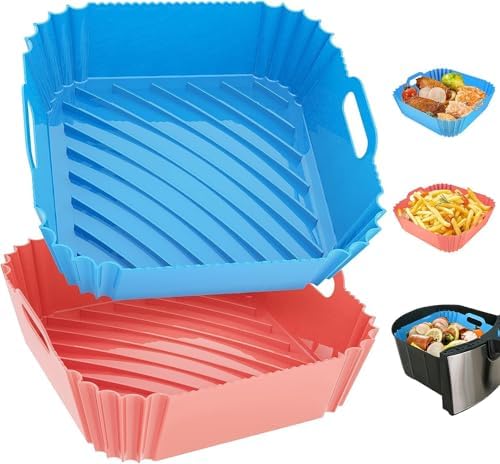
- Heat Resistant & Reusable air fryer liner 4 to 7 QT – Our silicone air fryer liners reusable are made of safe food-grade…
- Backing Must Have Silicone Air Fryer Liners – The oven liners for bottom of electric oven are thickened (thickness: 0.15…
- Non-Stick And Easy to Clean Square Air Fryer Liners – Reusable silicone air fryer liners. Compared to other round air fr…
Step by Step: How to Weigh Down an Air Fryer Liner Safely
Step 1. Choose the Right Liner
Opt for pre-perforated parchment liners specifically designed for air fryers. These holes help airflow so the paper doesn’t form air pockets or balloon upward. The liner should fit the bottom snugly without curling up the sides.
Avoid: thin baking parchment or flat paper sheets not labeled air fryer-safe.
Step 2. Preheat Without the Liner
Always preheat your air fryer first with an empty basket—no paper or food. This prevents the liner from blowing into the fan.
After preheating, turn off the air fryer or pull out the basket before inserting the liner.
Step 3. Lay In Your Liner
Place the liner flat in the basket bottom. Smooth out any wrinkles or bumps. Be sure edges don’t creep up along the sides, as these tend to scorch faster.
Step 4. Add Weight: Use Food or Accessories
Now comes the critical part— weighing it down.
Method 1: Use the Food Itself
Place your ingredients directly on top of the liner before turning the fryer back on. Evenly distribute heavier items first so the air can circulate underneath and hold the paper down.
Method 2: Use a Metal Rack or Trivet
If you’re air frying lighter foods—like kale chips or shrimp—place a small stainless steel trivet or mesh rack over the liner before adding food. This keeps paper flat even when the basket is lightly loaded.
Method 3: Use Silicone Weights or Liners
Reusable silicone baking mats or liners made for air fryers naturally stay in place due to their thickness and grip. You can even cut them to size or layer them under lightweight paper for extra hold.
Step 5. Avoid Overcrowding
Too much food can trap steam and make the liner soggy. Spread food evenly so hot air passes through the perforations—this keeps everything crisp and prevents paper edges from curling.
Step 6. Midway Check
Halfway through cooking, pull out the basket with tongs or heatproof gloves. Check that the liner hasn’t shifted or folded. If it has, reposition with tongs before resuming.
What NOT to Do
- Never preheat with an empty paper liner. It can blow up and touch heating coils.
- Don’t use plain wax paper. Wax melts under high heat, releasing fumes and residue.
- Avoid aluminum foil covering the entire base. It blocks airflow and risks overheating.
- Never weigh down liners with unsafe items like glass marbles or non-air fryer-safe ceramics—they can crack or shatter.
The Science Behind the Fix
Circulating air creates lift on lightweight surfaces, similar to wind under a kite. Adding weight eliminates that “lift potential,” while perforations reduce resistance by letting air pass through. Silicone liners and food pressure change how the airflow distributes, keeping heat balanced and the liner anchored.
This simple principle, balancing airflow and surface weight, is why weighing down your liner works perfectly every time.
Professional Insights: Lessons from Kitchen Experts
In professional test kitchens, chefs rarely use liners unless necessary. However, for home cooks who prefer minimal cleanup, experts recommend combining perforations with proper weight distribution.
Expert Tip: Always match your liner size to your air fryer basket. A liner that covers less than 90% of the base won’t block airflow or cause burning.
Bonus Insight: Heavier food ingredients (like chicken or potato wedges) act as natural anchors. When air frying small snacks—like popcorn tofu or chips—place a metal rack on top instead of piling more paper below.
Extra Tips, Hacks, and Preventive Maintenance
- Use Silicone Liners for Daily Cooking: They’re dishwasher safe and never blow up.
- Trim Oversized Paper: Cut liners to exact basket size before use.
- Inspect the Basket Regularly: Sticky oil buildup can make paper edges cling and curl—wipe surfaces dry before each use.
- Cool Before Removing the Liner: Hot air can cause paper to curl abruptly. Wait 2–3 minutes before discarding.
- Keep Vents Clear: If food crumbs collect at the fan vent, they can ignite paper residue later. Clean once a week.
DIY vs. Commercial Liners: Which Is Better?
| Method | Pros | Cons |
| DIY Cut Parchment Paper | Custom fit, cheaper, available anytime | Must perforate manually, lighter weight lifts easier |
| Commercial Perforated Liners | Perfect airflow, pre-sized circles, heat-resistant coating | Single-use, adds small recurring cost |
| Silicone Liners | Reusable, weighted, eco-friendly | Initial cost higher, requires thorough drying |
| Foil Liners | Strong and stays flat | Can block airflow, not ideal for crispy results |
Verdict: For most home users, a combination—pre-perforated paper for greasy foods and silicone mats for regular cooking, strikes the perfect balance.
When to Call a Professional
Normally, this is an easy fix. But you may need professional inspection if:
- The paper continues to burn or smoke even when weighted and properly placed.
- You see scorch marks near the heating coil or damaged insulation inside the lid.
- The fan makes grinding or rattling noises, suggesting trapped debris.
A certified appliance technician can clean and realign the fan safely, preventing further heat issues.
Cost, Time, and Effort Breakdown
| Factor | DIY Weigh-Down | Silicone Liner | Pre-Cut Liners |
| Cost per use | <$0.05 | Once-off ~$8–12 | ~$0.10 |
| Setup time | 1–2 minutes | 10 seconds | 5–10 seconds |
| Durability | Single use | 100+ uses | Single use |
| Ease of cleaning | Toss after use | Dishwasher safe | Toss after use |
For busy households, silicone options pay off in a few weeks, while DIY paper works great for occasional air fryer use.
FAQs About Weighing Down Air Fryer Liners
1. Can I use aluminum foil instead of a liner?
You can, but only if it doesn’t cover the whole basket and is pressed flat under food. Avoid touching the heating coil or blocking airflow holes.
2. Do I need a liner for every recipe?
No. Liner use is optional. It’s best for greasy foods like chicken wings or battered veggies to simplify cleanup. For dry snacks such as fries or toast, skip it.
3. Why does my parchment paper look scorched?
It touched the heating element or wasn’t rated for high temperatures. Always use parchment labeled “heat-resistant up to 450°F.”
4. Are silicone liners really safe?
Yes, if they’re BPA-free and rated for temperatures up to at least 480°F. Avoid off-brand rubber-like materials with unknown melting points.
5. My liner still floats even with food. What can I do?
Try reducing the fan speed (if your air fryer allows) or switch to a perforated silicone liner. Make sure food is evenly spread to create consistent downward weight.
6. Can I reuse parchment liners?
Not recommended. Once exposed to grease and heat, parchment weakens and can tear or discolor easily. Stick to one-time use for safety and hygiene.
Conclusion
Knowing how to weigh down an air fryer liner transforms your air frying experience from frustrating to flawless. By understanding airflow, choosing the right materials, and applying proper weight, from food, racks, or silicone mats, you’ll keep liners steady, prevent burning, and get consistently crisp results every time.
Next Steps:
- Invest in a set of perforated or silicone air fryer liners.
- Always preheat without paper in the basket.
- Use food or racks as natural weights.
- Clean and maintain your basket often to prolong both liner and appliance life.
With these methods, your air fryer will cook safely, efficiently, and mess-free—exactly as designed.